

Why You’ll Love This Poke Bowls
I absolutely love poke bowls because they’re so simple to whip up, especially on those hectic evenings when you’re juggling cooking with everything else! For starters, this recipe comes together in no time, letting you enjoy a restaurant-style meal without spending hours in the kitchen. Plus, it’s packed with fresh ingredients that make every bite feel like a healthy treat you’ll crave again and again.
What really gets me excited is how nutrient-rich poke bowls are, offering a fantastic mix of proteins, veggies, and grains that support your wellness goals. Whether you’re watching your diet or just want something light and satisfying, these bowls deliver on flavor and nutrition without sacrificing taste. Their versatility means you can tweak them for different preferences, making them a go-to for busy parents, students, or anyone exploring new flavors at home.
Oh, and let’s not forget the burst of tastes in every forkful the savory fish, sweet fruits, and zesty sauces create a harmony that’s hard to beat! This makes poke bowls perfect for food enthusiasts or even newlyweds looking to add fun to their meals. I always feel inspired sharing recipes like this one, helping readers like you build memorable moments around the table.
Essential Ingredients for Poke Bowls
As someone who adores creating vibrant meals, I can’t wait for you to try this poke bowl recipe with its fresh and flavorful lineup! Below, I’ve listed out all the ingredients you’ll need, pulling together everything from the marinade to the toppings and sauce. This structured list ensures you have the exact measurements for a perfect bowl every time trust me, it’s worth the prep!
- 12-16 oz (340-450 g) sushi-grade ahi tuna, cut into 1/2-inch (1.3 cm) cubes
- 3 Tbsp low-sodium tamari or soy sauce
- 1 Tbsp rice vinegar
- 1 tsp sesame oil
- 1 tsp honey
- 1/8 tsp ground ginger
- 3 scallions, finely chopped (half for the marinade, half for garnish)
- 1 batch coconut-flavored rice (prepared according to your preferred method)
- 1 small chunk of peeled jicama or daikon, sliced into match-sticks
- 1/2 English cucumber, diced into small cubes
- 1 ripe mango, peeled and diced into small cubes
- 1 cup shelled, cooked edamame (≈150 g)
- 1 large avocado, peeled and diced
- 2/3 cup macadamia nuts, roughly chopped (≈90 g)
- 1 tsp sesame seeds, for garnish
- 1/2 cup mayonnaise (≈120 ml)
- 1 clove garlic, minced
- 1 tsp lemon or lime juice
- A pinch of sea salt
- 1-2 tsp sriracha (adjust to taste)
These ingredients create a balanced mix that’s easy to customize for dietary needs, like swapping proteins for vegan options. For even more fresh ideas, check out my simple cucumber sandwiches recipe for crunchy veggie inspiration!
How to Prepare the Perfect Poke Bowls: Step-by-Step Guide
Let me walk you through making these poke bowls I promise it’s as fun as it is tasty! Start by preparing the rice, which sets the stage for all the delicious layers. Follow these steps to create a meal that bursts with flavor and keeps things super simple for home cooks like us.
- Prepare the rice by cooking coconut rice using your usual method and keeping it warm.
- Marinate the tuna by whisking together tamari, rice vinegar, sesame oil, honey, ground ginger, and half of the chopped scallions in a bowl. Add the tuna cubes, toss to coat, and refrigerate for 15 minutes to 1 hour.
- Make the aioli by combining mayonnaise, minced garlic, citrus juice, sea salt, and sriracha in a separate bowl; set it aside.
- Prep toppings by boiling or steaming edamame until tender if needed, then slice jicama or daikon, dice cucumber, mango, and avocado, and roughly chop macadamia nuts.
- Assemble each bowl by placing a generous scoop of coconut rice in the center of a shallow bowl, then arrange the marinated ahi, jicama, cucumber, mango, edamame, and avocado around the rice. Sprinkle sesame seeds on the tuna and avocado.
- Finish by garnishing with the remaining scallions, macadamia nuts, and drizzling the Sriracha aioli over the top.
This guide makes it easy to adapt for different proteins or veggies, and it’s ready in just 30 minutes total! If you’re looking for more quick meal ideas, try my vibrant Mexican corn salad recipe for a fresh side that pairs perfectly.

Dietary Substitutions to Customize Your Poke Bowls
One of the best things about poke bowls is how easy they are to tweak for your needs it’s like a personalized adventure in your kitchen! For protein swaps, you can replace ahi tuna with options like cooked shrimp, salmon, or even marinated tofu to fit vegan or pescatarian diets. I often experiment with these to keep things exciting for busy parents and diet-conscious folks.
When it comes to veggies and sauces, try swapping cucumbers with zucchini or using tamari instead of soy sauce for gluten-free versions. Don’t hesitate to adjust seasonings, like adding sriracha for extra spice or reducing honey for less sweetness. These changes make poke bowls versatile for everyone, from students to seniors looking for light meals.
Remember, for a low-calorie twist, use cauliflower rice as a base it’s a game-changer! This way, you can enjoy poke bowls that align with your health goals while still packing in those fresh flavors that make every meal memorable.
Mastering Poke Bowls: Advanced Tips and Variations
Once you’re comfortable with the basics, let’s level up your poke bowls with some pro tips that I swear by! Use sashimi-grade fish for the freshest taste and safety, and marinate your proteins briefly to lock in deeper flavors. Adding pickled vegetables can bring a nice contrast that elevates the whole dish.
For flavor twists, play around with sauces like spicy mayo or citrus ponzu to match your mood it’s amazing how a simple change can transform the bowl! If you want a sweet element, toss in tropical fruits like mango or pineapple, which pair wonderfully with the savory bits.
Presentation and Make-Ahead Ideas
Presentation is key to making your poke bowls pop; arrange ingredients in colorful sections in a shallow bowl for that wow factor. Garnish with extras like microgreens or toasted nori to impress your guests. For busy schedules, prep components ahead but assemble right before eating to keep everything crisp and fresh.
These variations make poke bowls ideal for travelers or working professionals who need quick, customizable meals. Trust me, once you master these, you’ll be creating poke bowls that everyone raves about!
How to Store Poke Bowls: Best Practices
Storing poke bowls the right way keeps them tasty and safe, which is a big win for meal prep lovers! Refrigerate assembled bowls in airtight containers for up to 24 hours, but try to keep dressings separate to avoid sogginess. This method works great for those packed schedules we all deal with.
If you’re thinking about freezing, stick to components like cooked rice or proteins for up to one month, but skip raw fish to prevent any issues. When reheating, warm the rice gently and add fresh toppings afterward to maintain that perfect texture. For meal prep, store ingredients separately and combine just before serving it’s a simple hack that preserves flavor and quality.

FAQs: Frequently Asked Questions About Poke Bowls
What exactly is a poke bowl and where did it originate?
How can I safely buy and handle raw fish for making poke bowls at home?
What are some good substitutes for ahi tuna in poke bowls if I don’t eat raw fish?
Can I create a vegetarian or vegan poke bowl, and what ingredients work best?
What types of rice or grains are best for building a poke bowl base?
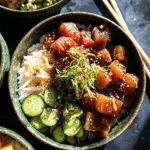
Poke Bowls
- Total Time: 30 minutes
- Yield: 5 servings
- Diet: Pescatarian
Description
🥢 Fresh, vibrant ingredients make this poke bowl a nutrient‑rich, colorful meal that’s quick to assemble.
🌶️ The sweet‑spicy sriracha aioli and tangy tamari‑marinated ahi add bold flavor for a satisfying bite.
Ingredients
– 12-16 oz (340-450 g) sushi-grade ahi tuna
– 3 Tbsp low-sodium tamari or soy sauce
– 1 Tbsp rice vinegar
– 1 tsp sesame oil
– 1 tsp honey
– 1/8 tsp ground ginger
– 3 scallions, finely chopped (half for the marinade, half for garnish)
– 1 batch coconut-flavored rice (prepared according to your preferred method)
– 1 small chunk peeled jicama or daikon, sliced into match-sticks
– 1/2 English cucumber, diced into small cubes
– 1 ripe mango, peeled and diced into small cubes
– 1 cup shelled, cooked edamame (≈150 g)
– 1 large avocado, peeled and diced
– 2/3 cup macadamia nuts, roughly chopped (≈90 g)
– 1 tsp sesame seeds, for garnish
– 1/2 cup mayonnaise (≈120 ml)
– 1 clove garlic, minced
– 1 tsp lemon or lime juice
– A pinch sea salt
– 1-2 tsp sriracha (adjust to taste)
Instructions
1: Prepare the rice by cooking coconut rice using your usual method and keeping it warm.
2: Marinate the tuna by whisking together tamari, rice vinegar, sesame oil, honey, ground ginger, and half of the chopped scallions in a bowl. Add the tuna cubes, toss to coat, and refrigerate for 15 minutes to 1 hour.
3: Make the aioli by combining mayonnaise, minced garlic, citrus juice, sea salt, and sriracha in a separate bowl; set it aside.
4: Prep toppings by boiling or steaming edamame until tender if needed, then slice jicama or daikon, dice cucumber, mango, and avocado, and roughly chop macadamia nuts.
5: Assemble each bowl by placing a generous scoop of coconut rice in the center of a shallow bowl, then arrange the marinated ahi, jicama, cucumber, mango, edamame, and avocado around the rice. Sprinkle sesame seeds on the tuna and avocado.
6: Finish by garnishing with the remaining scallions, macadamia nuts, and drizzling the Sriracha aioli over the top.
Notes
🐟 Choose sushi-grade ahi from a reputable source for the best texture and flavor.
🥜 If you prefer a nut-free version, substitute toasted pumpkin seeds for macadamia nuts.
🌱 For a vegetarian version, replace the fish with firm tofu or increase the amount of edamame and vegetables.
- Prep Time: 30 minutes
- Cook Time: 0 minutes
- Category: Main Dish
- Method: Assembling
- Cuisine: Hawaiian
Nutrition
- Serving Size: 1 bowl (≈350 g)
- Calories: 303 kcal
- Sugar: 9 g
- Sodium: 824 mg
- Fat: 17 g
- Saturated Fat: 3 g
- Unsaturated Fat: 13 g
- Trans Fat: 1 g
- Carbohydrates: 18 g
- Fiber: 5 g
- Protein: 22 g
- Cholesterol: 29 mg
Keywords: poke bowl, ahi tuna, fresh toppings, sriracha aioli