
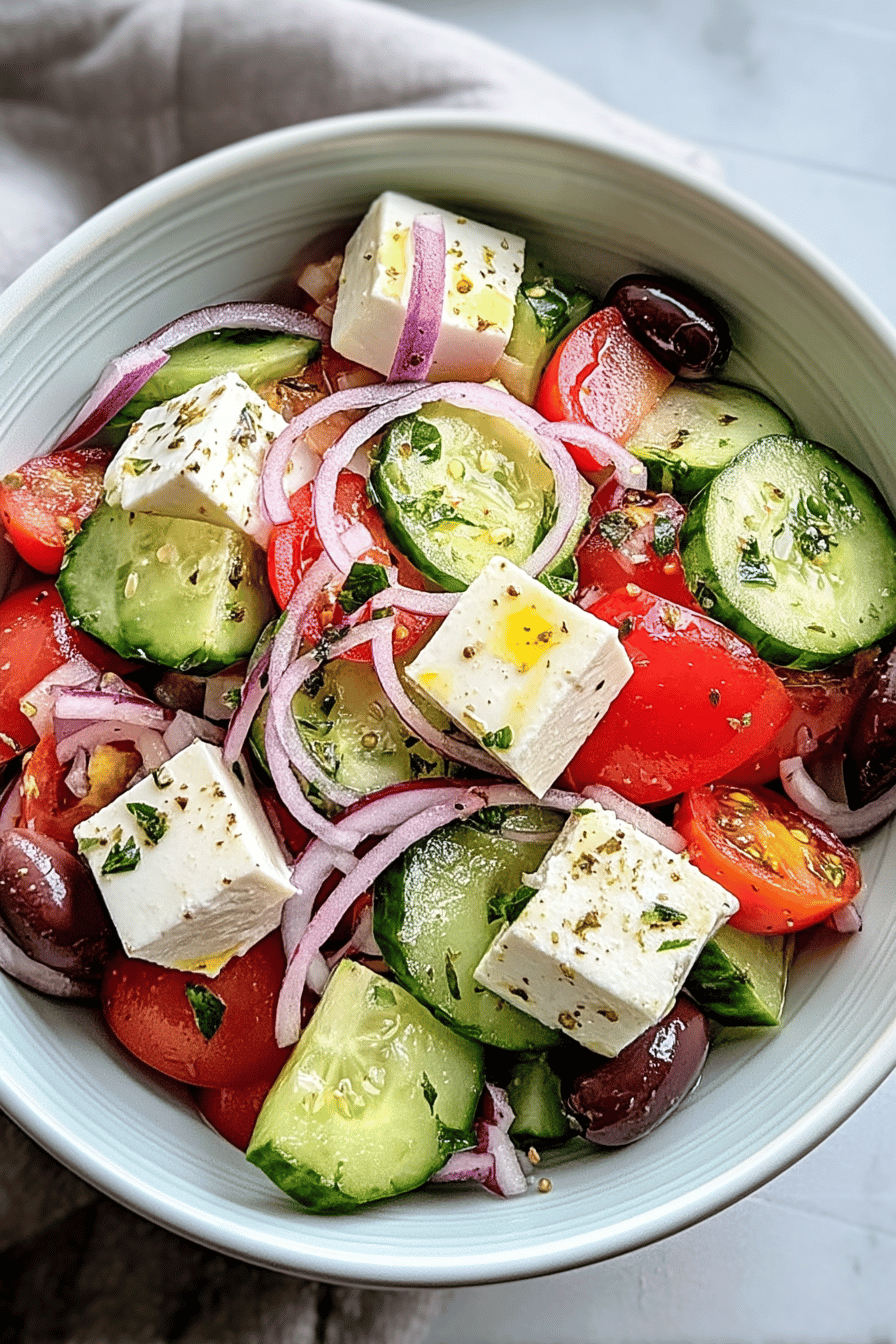
Why You’ll Love This classic greek salad
- Ease of preparation: This classic Greek salad is incredibly simple and quick to prepare, making it perfect for busy days. With minimal chopping and no cooking required, you can enjoy a fresh and delicious meal in under 15 minutes. The combination of fresh vegetables and a straightforward dressing means you can have it ready in a flash without complicating your schedule.
- Health benefits: Packed with vibrant tomatoes, crisp cucumbers, briny olives, and rich feta cheese, this salad provides a nutritious boost full of antioxidants, vitamins, and heart-healthy fats. The inclusion of extra virgin olive oil and fresh herbs adds wellness-supporting nutrients that promote cardiovascular health and overall vitality.
- Versatility: The recipe adapts effortlessly to various dietary preferences, including vegan, gluten-free, and low-calorie diets. You can omit or swap ingredients like feta cheese for plant-based alternatives or reduce olive oil for lighter versions, maintaining great taste while fitting different nutritional needs.
- Distinctive flavor: The classic Greek salad shines with its unique blend of salty feta, tangy olives, crisp vegetables, and a zesty dressing made from red wine vinegar and oregano. This combination offers a refreshing, authentic Mediterranean taste that brightens any meal and satisfies the palate with each bite.
Essential Ingredients for classic greek salad
| Ingredient | Quantity | Purpose / Benefit |
|---|---|---|
| Red onion, thinly sliced into half moons | 1 medium | Adds sharpness, crunch, and a mild pungent flavor after soaking |
| Tomatoes, sliced into bite-sized wedges | 4 medium | Delivers juicy sweetness and fresh texture |
| English cucumber, partially peeled and sliced into half moons | 1 cucumber | Provides crispness and adds refreshing coolness |
| Green bell pepper, cored and sliced into rings or chopped | 1 pepper | Contributes a firm texture and mild sweetness |
| Pitted Kalamata olives or high-quality olives | About ⅓ cup | Supplies briny, savory depth to the salad |
| Dried oregano | 1 ½ teaspoons (divided) | Infuses signature Greek herbal aroma and flavor |
| Kosher salt | To taste | Balances and enhances overall flavors |
| Extra virgin olive oil | ¼ cup | Creates a rich, fruity dressing base with healthy fats |
| Red wine vinegar | 1-2 tablespoons | Adds tangy acidity to brighten the salad |
| Garlic, minced (optional) | 1 clove | Provides an aromatic boost to the dressing if desired |
| Dijon mustard (optional) | 1 tablespoon | Thickens and enriches the dressing with a subtle kick |
| Greek feta cheese packed in brine, torn into slabs or cubes | 7-ounce block | Offers creamy, salty richness and authentic texture |
| Fresh mint leaves (optional for garnish) | About ⅓ cup | Enhances freshness and adds a pleasant herbal note |
Special Dietary Options
- Vegan: Omit feta cheese and consider adding protein-rich chickpeas or capers for a plant-based alternative, maintaining the salad’s heartiness and flavor balance.
- Gluten-free: This classic Greek salad naturally contains gluten-free ingredients, making it a safe and refreshing choice for gluten-sensitive individuals.
- Low-calorie: Adjust by reducing or omitting feta cheese and using less extra virgin olive oil while enjoying the crisp vegetables and tangy dressing for a lighter version.
How to Prepare the Perfect classic greek salad: Step-by-Step Guide
First Step: Prepare the Vegetables
Start by washing all fresh produce thoroughly under cool running water. Thinly slice 1 medium red onion into half moons. For a milder flavor, soak the sliced onion in ice water mixed with 1 teaspoon of red wine vinegar for about 10 minutes, then drain well. Next, slice 4 medium tomatoes into bite-sized wedges, peel 1 English cucumber partially in a striped pattern and slice it into half moons. Core and slice 1 green bell pepper into rings or roughly chop into 1-inch pieces for a textural balance in the salad.
Second Step: Combine the Base Ingredients
In a large serving bowl or platter, combine the prepared tomatoes, cucumber, green bell pepper, pitted Kalamata olives (about ⅓ cup), and the drained red onions. Toss gently to keep the vegetables intact while mixing evenly.
Third Step: Make the Dressing
In a small bowl, whisk together ¼ cup extra virgin olive oil, 1-2 tablespoons red wine vinegar, 1 clove minced garlic (optional), 1 tablespoon Dijon mustard (optional), ¾ teaspoon dried oregano, kosher salt to taste, and freshly ground black pepper. This vibrant dressing delivers the characteristic tangy and herby flavor of the classic Greek salad while balancing the natural sweetness and brininess of the ingredients.
Fourth Step: Dress and Toss the Salad
Pour the dressing over the combined vegetables. Gently toss the salad with care to evenly coat all ingredients without breaking the delicate feta cheese. Taste the salad and adjust salt and pepper as needed, bearing in mind the saltiness coming from the olives and feta.
Fifth Step: Add the Feta and Garnish
Top the salad with torn or cubed slabs of 7-ounce block Greek feta cheese packed in brine. Sprinkle the remaining ¾ teaspoon dried oregano over the top. Optionally, garnish with fresh mint leaves (about ⅓ cup) and finish with a final dusting of black pepper for a burst of color and flavor.
Final Step: Serve or Store
Serve the classic Greek salad immediately to enjoy the freshest, crisp flavors. Alternatively, cover and refrigerate any leftovers for up to 2 days. For best taste, toss lightly again before serving. This salad also pairs wonderfully as a side dish with grilled meats like steak or shrimp stir fry for a more complete Mediterranean meal.
Tip: For a vegan variation, simply omit the feta cheese and add a handful of cooked chickpeas to maintain protein and texture.
Try pairing this refreshing salad with a flavorful shrimp and broccoli stir fry for a balanced and delicious meal.

Dietary Substitutions to Customize Your classic greek salad
Protein and Main Component Alternatives
- Vegan feta alternatives: Use almond-based or tofu feta to keep the creamy, salty texture while staying plant-based.
- Added protein options: Include grilled chicken, marinated tempeh, or cooked chickpeas for a heartier salad without detracting from the fresh flavors.
- Omitting cheese: For dairy-free or vegan diets, simply leave out feta and increase olives or add protein-rich legumes.
Vegetable, Sauce, and Seasoning Modifications
- Vegetable swaps: Use zucchini ribbons or thinly sliced bell peppers instead of cucumber or add cherry tomatoes for sweeter bursts.
- Dressing alternatives: Substitute red wine vinegar with lemon juice or apple cider vinegar for a different acidic profile.
- Herb variations: Add fresh parsley, mint, or oregano to brighten and tailor the salad to personal taste or seasonal availability.
- Seasoning tweaks: Incorporate capers or a sprinkle of sumac for subtle layers of flavor that complement the classic ingredients.
Mastering classic greek salad: Advanced Tips and Variations
- Pro cooking techniques: Use high-quality extra virgin olive oil and freshly dried or fresh herbs to enhance authenticity and elevate flavor complexity. Soaking the red onions briefly in vinegar and ice water mellows sharpness and adds balance.
- Flavor variations: Add roasted red peppers, capers, or finely diced garlic for extra savory notes. Experiment with a light drizzle of aged balsamic for sweetness or sprinkle sumac for a lemony tang.
- Presentation tips: Serve on chilled plates or rustic platters. Garnish with fresh oregano sprigs, mint leaves, or lemon wedges for a vibrant, inviting look.
- Make-ahead options: Prepare and store vegetables and dressing separately to keep components crisp. Combine just before serving to maintain freshness and texture, perfect for busy days or entertaining.
How to Store classic greek salad: Best Practices
| Storage Method | Details |
|---|---|
| Refrigeration | Store the salad covered in an airtight container in the fridge up to 2 days. Keep dressing separate or add just before serving to avoid sogginess. |
| Freezing | Not recommended due to the fresh vegetables and cheese, which will become watery and lose texture when thawed. |
| Reheating | This salad is best served cold or at room temperature; heating is not advised to preserve crispness. |
| Meal prep considerations | Prepare vegetables and dressing separately, combining minutes before eating to enjoy maximum freshness. |
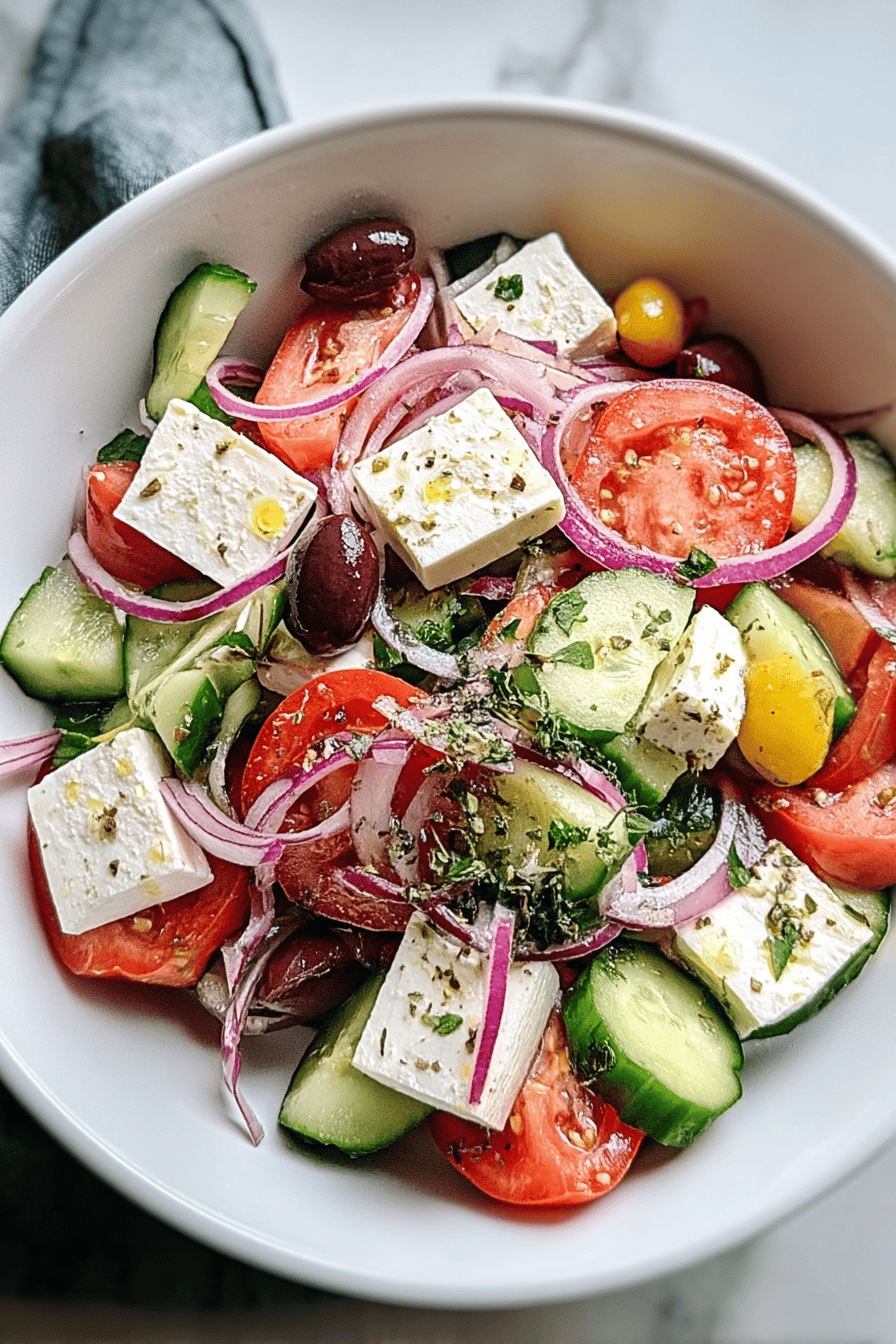
FAQs: Frequently Asked Questions About classic greek salad
What are the main ingredients in a classic Greek salad?
How do you properly prepare and dress a Greek salad?
Can I make a Greek salad ahead of time without it becoming soggy?
Is Greek salad suitable for people following a low-carb or vegetarian diet?
What are common variations or additions to a traditional Greek salad?
classic greek salad
- Total Time: 15 minutes
- Yield: 4 servings 1x
- Diet: Vegetarian
Description
🥗 Refresh your palate with this classic Greek salad, bursting with vibrant colors and zesty flavors.
🇬🇷 Enjoy a quick and easy dish that makes a perfect light meal or side, infused with traditional Greek ingredients.
Ingredients
1 medium Red onion, thinly sliced into half moons
4 medium Tomatoes, sliced into bite-sized wedges
1 cucumber English cucumber, partially peeled and sliced into half moons
1 pepper Green bell pepper, cored and sliced into rings or chopped
About ⅓ cup Pitted Kalamata olives or high-quality olives
1 ½ teaspoons Dried oregano
Kosher salt To taste
¼ cup Extra virgin olive oil
1–2 tablespoons Red wine vinegar
1 clove Garlic, minced
1 tablespoon Dijon mustard
7-ounce block Greek feta cheese packed in brine, torn into slabs or cubes
About ⅓ cup Fresh mint leaves
Instructions
First Step: Prepare the Vegetables Start by washing all fresh produce thoroughly under cool running water. Thinly slice 1 medium red onion into half moons. For a milder flavor, soak the sliced onion in ice water mixed with 1 teaspoon of red wine vinegar for about 10 minutes, then drain well. Next, slice 4 medium tomatoes into bite-sized wedges, peel 1 English cucumber partially in a striped pattern and slice it into half moons. Core and slice 1 green bell pepper into rings or roughly chop into 1-inch pieces for a textural balance in the salad.
Second Step: Combine the Base Ingredients In a large serving bowl or platter, combine the prepared tomatoes, cucumber, green bell pepper, pitted Kalamata olives (about ⅓ cup), and the drained red onions. Toss gently to keep the vegetables intact while mixing evenly.
Third Step: Make the Dressing In a small bowl, whisk together ¼ cup extra virgin olive oil, 1-2 tablespoons red wine vinegar, 1 clove minced garlic (optional), 1 tablespoon Dijon mustard (optional), ¾ teaspoon dried oregano, kosher salt to taste, and freshly ground black pepper. This vibrant dressing delivers the characteristic tangy and herby flavor of the classic Greek salad while balancing the natural sweetness and brininess of the ingredients.
Fourth Step: Dress and Toss the Salad Pour the dressing over the combined vegetables. Gently toss the salad with care to evenly coat all ingredients without breaking the delicate feta cheese. Taste the salad and adjust salt and pepper as needed, bearing in mind the saltiness coming from the olives and feta.
Fifth Step: Add the Feta and Garnish Top the salad with torn or cubed slabs of 7-ounce block Greek feta cheese packed in brine. Sprinkle the remaining ¾ teaspoon dried oregano over the top. Optionally, garnish with fresh mint leaves (about ⅓ cup) and finish with a final dusting of black pepper for a burst of color and flavor.
Final Step: Serve or Store Serve the classic Greek salad immediately to enjoy the freshest, crisp flavors. Alternatively, cover and refrigerate any leftovers for up to 2 days. For best taste, toss lightly again before serving. This salad also pairs wonderfully as a side dish with grilled meats like steak or shrimp stir fry for a more complete Mediterranean meal.
Notes
🍅 English cucumbers are preferred for their sweeter taste; if using regular cucumbers, peel fully to remove bitterness.
🫒 Using cherry tomatoes or seeding the tomatoes can help prevent excess water in the salad.
🧀 Whole blocks of feta packed in brine provide better flavor and appearance than crumbled feta.
- Prep Time: 15 minutes
- Refrigerating leftovers: 2 days
- Cook Time: –
- Category: Salad
- Method: No-Cook
- Cuisine: Greek
Nutrition
- Serving Size: 1 serving
- Calories: 103
- Sugar: –
- Sodium: Varies with olives and feta
- Fat: 9.5 g
- Saturated Fat: 1.3 g
- Unsaturated Fat: –
- Trans Fat: –
- Carbohydrates: 4.7 g
- Fiber: 1.1 g
- Protein: 0.7 g
- Cholesterol: –
Keywords: classic Greek salad,Greek flavors,quick salad,refreshing dish